Operation Searchlight
Pakistan Army launches a devastating military crackdown.
The talks end
Through the middle of March 1971, President Yahya Khan held talks in Dhaka with Sheikh Mujibur Rahman, later joined by Zulfikar Ali Bhutto. At the same time, soldiers and weapons were being brought in from West Pakistan, and Bengali units in the army were being quietly disarmed or moved. On 25 March, Awami League leaders learned that Yahya Khan's delegation had secretly left Dhaka. Any hope of a peaceful settlement was gone.
Foreign journalists were rounded up and expelled from East Pakistan before the operation began.
The night of 25 March
That night, the Pakistan Army launched a planned operation, code-named Operation Searchlight. Its aim, as Wikipedia describes it, was to take control of the major cities by the next day and crush all political and military opposition within a month.
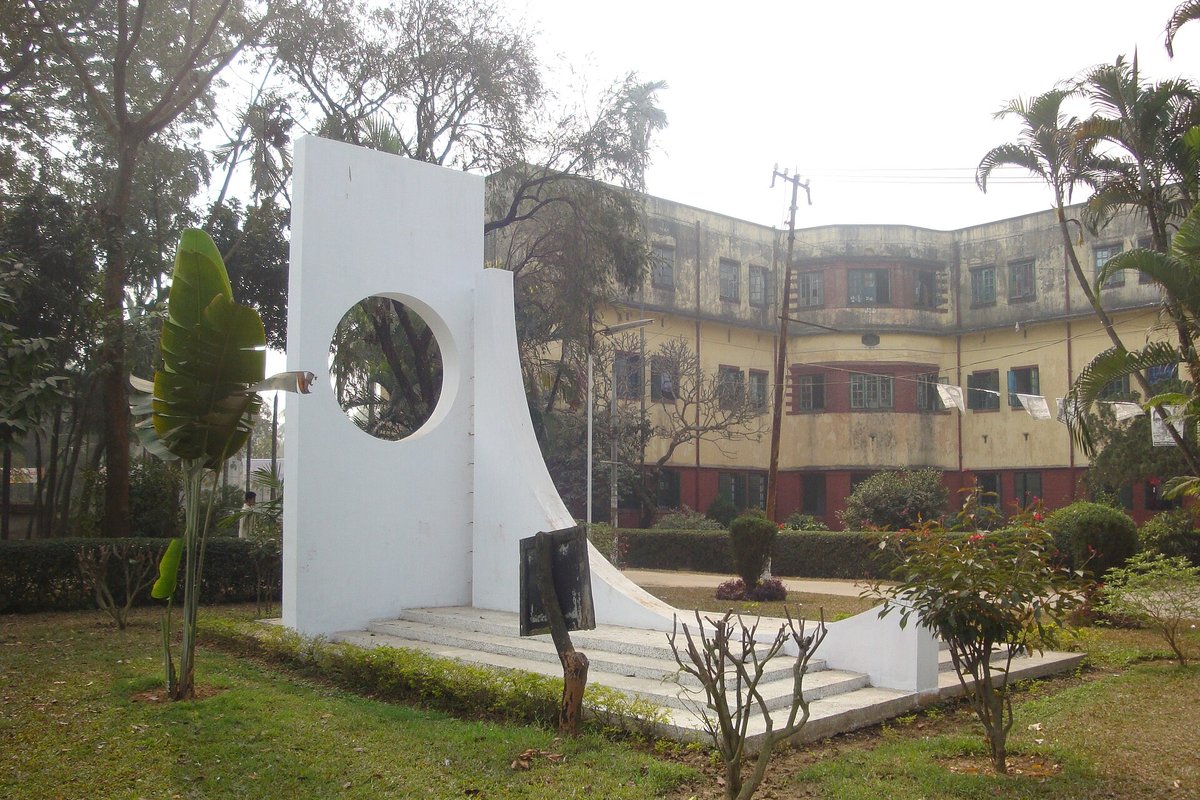
Dhaka was hit hardest. Soldiers attacked the University of Dhaka's residential halls; Jagannath Hall, home to Hindu students, was destroyed and hundreds of its residents were killed. University teachers were among the dead. The army attacked the Rajarbagh police lines and the headquarters of the East Pakistan Rifles, and moved through Hindu neighbourhoods of old Dhaka. Sheikh Mujibur Rahman was arrested and later taken to West Pakistan. The Awami League was banned.
Beyond Dhaka
The killing did not stay in the capital. Over the following weeks the army spread across East Pakistan, and the main phase of the operation ended only in mid-May, when the last large town held by Bengali forces fell. Students, intellectuals, Awami League supporters, Bengali soldiers and police, and Hindus were singled out.
Operation Searchlight is described on Wikipedia as the start of the Bangladesh genocide. Estimates of the people killed during the nine months of war vary enormously, from around 300,000 to 3,000,000. Some ten million people fled to India as refugees, and many millions more were driven from their homes inside the country.
The truth gets out
With foreign reporters gone, the world learned slowly. In June 1971, the Pakistani journalist Anthony Mascarenhas, who had been brought to the province to write favourable coverage, escaped to Britain and published a report in The Sunday Times describing the killings. Wikipedia notes that India's prime minister, Indira Gandhi, later said the article helped prepare the ground for India's intervention.
Why it matters
Operation Searchlight ended any chance of a united Pakistan. It turned a political crisis into a war, and the Bengali demand for self-rule into a struggle for survival and independence, declared within hours of the first shots.
Thanks and sources
Thank you to Wikipedia and its volunteer editors for the information on this page. What you read here is our own summary, based on the Wikipedia articles below. Wikipedia text is shared under the Creative Commons Attribution-ShareAlike 4.0 licence (CC BY-SA 4.0).
- Operation Searchlight
- Bangladesh genocide
- Bangladesh Liberation War (Operation Searchlight section)
- Provisional Government of Bangladesh (Background section)