Urdu declared the sole state language
Bengali-speaking East Pakistan protests.
A language question from the very start
When Pakistan was created, Bengali speakers in East Bengal made up the majority of the new country: about 44 million of its roughly 69 million people. Yet the government, the civil service and the army were dominated by people from the western wing, and the push was for Urdu, a language few in East Bengal spoke, to be the national language.
The signs came early. In November 1947, an education conference in Karachi recommended Urdu and English as the state languages. Bengali was dropped from the list of subjects for public service exams and disappeared from new currency notes and stamps. Students in Dhaka held a meeting at the University of Dhaka on 8 December 1947 to demand official status for Bengali.
March 1948: strikes, arrests, and "Urdu, and only Urdu"
On 11 March 1948, students in Dhaka called a general strike against Bengali being left out of official use. Several young political activists were arrested, including Shamsul Huq and a student leader named Sheikh Mujibur Rahman. After days of protest, the provincial chief minister, Khawaja Nazimuddin, signed an agreement with the student leaders, though it did not grant their central demand.
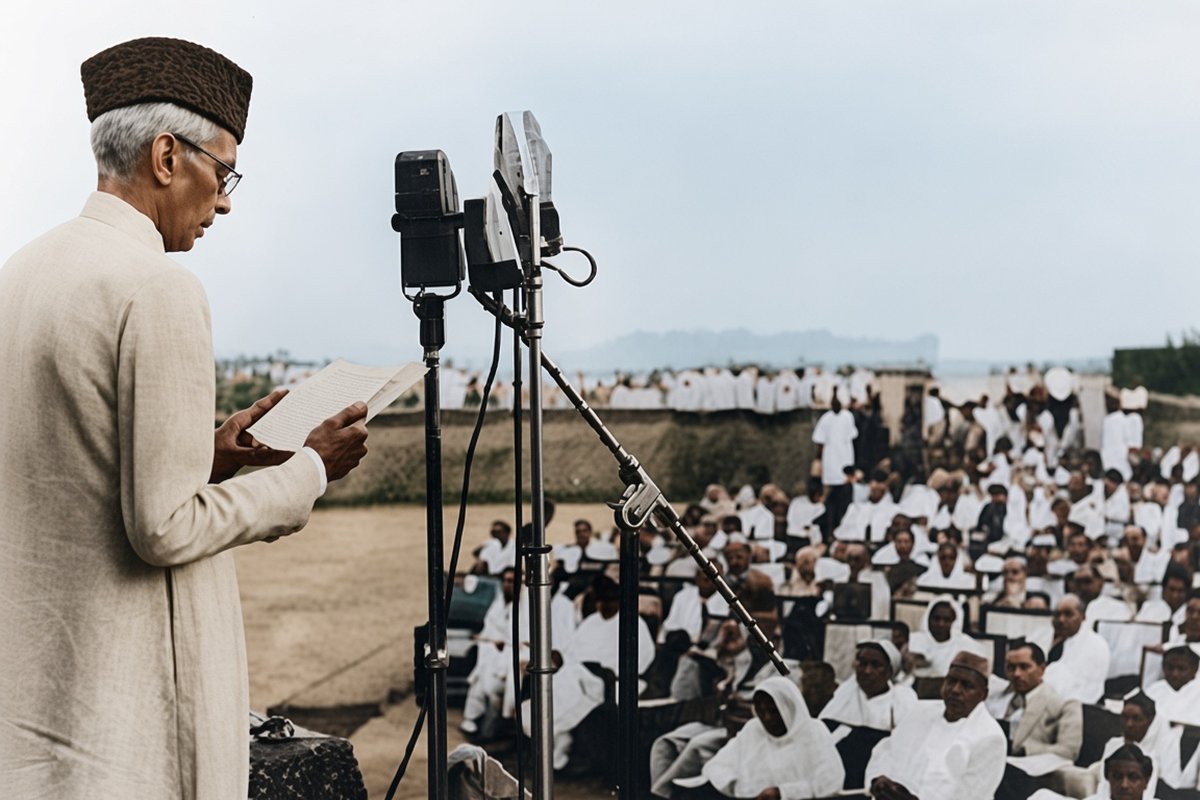
Then Pakistan's Governor-General, Muhammad Ali Jinnah, came to Dhaka. At a large public reception on 21 March 1948, he declared that Urdu alone would be the state language and cast opponents of that policy as enemies of Pakistan. He repeated the message at the University of Dhaka's Curzon Hall on 24 March, where students openly objected while he spoke. Before leaving, he restated the Urdu-only policy in a radio address.
Why it mattered
For many people in East Bengal this was the first clear sign that the new state might not see them as equals. Language was not a small matter: it decided who could sit exams, get government jobs, and read the laws they lived under. Losing Bengali in public life meant losing a place in the country itself.
The protests of 1948 did not settle the question, but they gave it a shape. Students, writers and young politicians had found a cause, and they would return to it four years later, at much greater cost.
A small win along the way
On 6 April 1948, the East Bengal assembly passed a resolution making Bengali an official language of the province. The larger fight, for Bengali to stand beside Urdu as a language of the whole country, was still ahead.
Thanks and sources
Thank you to Wikipedia and its volunteer editors for the information on this page. What you read here is our own summary, based on the Wikipedia articles below. Wikipedia text is shared under the Creative Commons Attribution-ShareAlike 4.0 licence (CC BY-SA 4.0).
- Bengali language movement
- Bangladesh Liberation War (Language controversy section)