Bangla becomes a state language
Pakistan constitution recognizes both Urdu and Bengali.
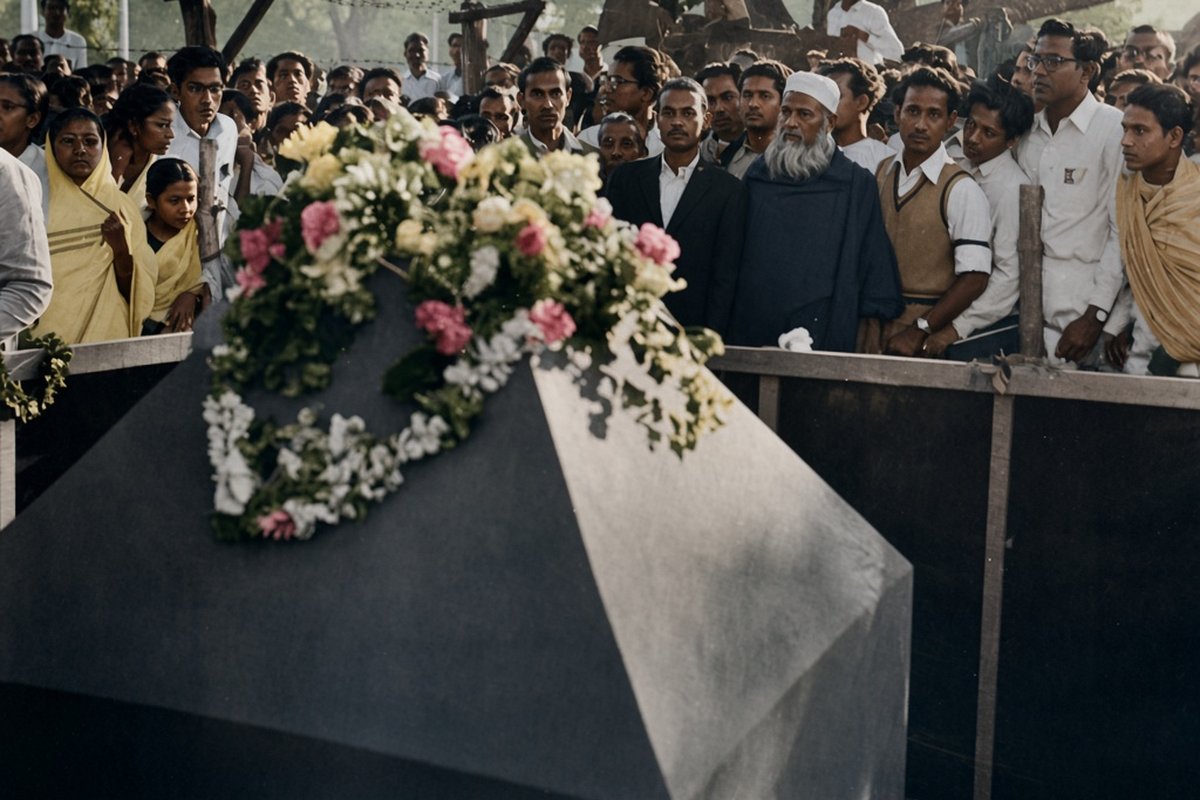
Nine years without a constitution
For its first nine years, Pakistan had no constitution of its own. It ran on an adapted version of a British-era law while its Constituent Assembly argued over how the new country should be shaped. One of the hardest questions was the one students in Dhaka had already paid for with their lives: which language, or languages, would belong to the state.
The decision
Pressure from East Bengal had been building since 1952, and the United Front's landslide in 1954 made it impossible to ignore. On 7 May 1954, the Constituent Assembly, with the Muslim League's support, resolved to give Bengali official status.
That promise was written into law when the assembly adopted Pakistan's first constitution on 29 February 1956. It came into force on 23 March 1956 and made Pakistan an Islamic Republic. Under it, Urdu and Bengali were both national languages. Members could now speak Bengali in parliament, and the constitution opened the way for higher education in Bengali.
Just a week earlier, on 21 February 1956, the anniversary of the 1952 killings was marked peacefully for the first time, with official support.
A victory, and its limits
The language movement had won its central demand. Four years after the shootings in Dhaka, Bangla stood beside Urdu in the country's founding law.
But the same constitution set equal seats for East and West Pakistan in the National Assembly, even though the east had more people. In practice, that meant East Pakistan was under-represented. The language question was settled; the deeper question of power was not.
Short-lived
The 1956 constitution lasted only about two and a half years. In October 1958 it was abrogated and the country was placed under martial law. Recognition of Bengali survived as policy, but the democratic framework around it was gone.
Thanks and sources
Thank you to Wikipedia and its volunteer editors for the information on this page. What you read here is our own summary, based on the Wikipedia articles below. Wikipedia text is shared under the Creative Commons Attribution-ShareAlike 4.0 licence (CC BY-SA 4.0).