Partition of British India
East Bengal becomes part of Pakistan.
One country, two distant wings
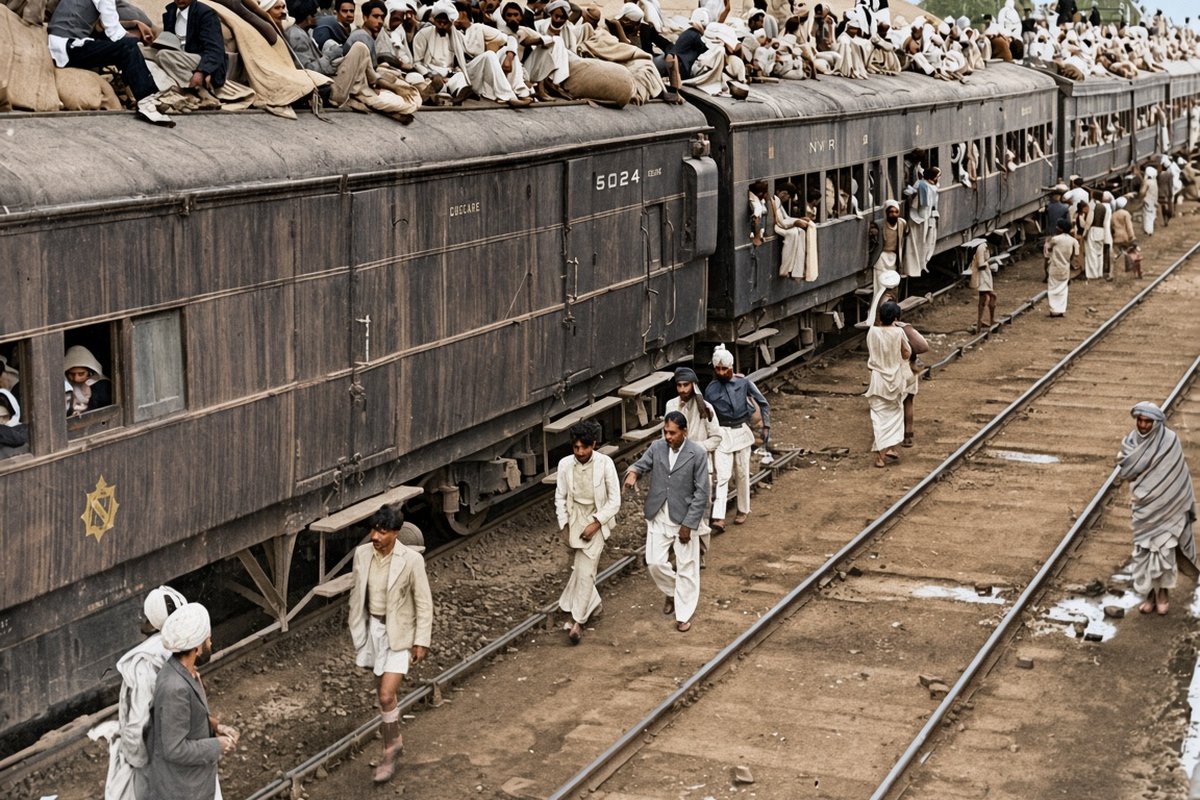
In August 1947, British rule in the subcontinent ended and two new states were born: India and Pakistan. Pakistan came into being on 14 August and India the next day. The dividing line followed religion. Areas with Muslim majorities went to Pakistan, the rest to India, and two large provinces, Punjab and Bengal, were cut in half to make that possible.
Bengal's eastern, mostly Muslim districts became East Bengal, a province of Pakistan. Sylhet, then part of Assam, joined it after a referendum. The western half became West Bengal, in India.
The result was an unusual country. Pakistan's two wings lay on opposite sides of India, more than 1,600 kilometres apart, with different languages, food, dress and everyday life. In 1955 East Bengal was renamed East Pakistan.
A border drawn in haste
The line through Bengal and Punjab was drawn by a boundary commission chaired by a London barrister, Sir Cyril Radcliffe. It was made public on 17 August 1947, two days after independence, so people only learned which country they lived in once that country already existed.
Partition uprooted somewhere between 12 and 20 million people across the subcontinent, and the violence that came with it killed hundreds of thousands or more; estimates still vary widely. In Bengal, many Hindu families left the east for India, while Muslims from West Bengal, Bihar and Assam moved east.
Why it matters for Bangladesh
East Bengal held more of Pakistan's people than the western wing did, but power, the capital, the army command and most of the money sat in the west. That imbalance would shape the next 24 years.
A shared faith had been meant to hold the two wings together. Over time, language, culture and the feeling of being governed from far away pulled them apart. Almost every later chapter on this timeline, from the language protests of 1948 to the war of 1971, starts here.
A quieter thought
The idea of a separate Bengal was not new in 1947. A proposal for an independent, undivided Bengal was put forward in 1946 and set aside. Bangladesh would eventually come out of the same eastern half of Bengal that Partition created, but by a much harder road.
Thanks and sources
Thank you to Wikipedia and its volunteer editors for the information on this page. What you read here is our own summary, based on the Wikipedia articles below. Wikipedia text is shared under the Creative Commons Attribution-ShareAlike 4.0 licence (CC BY-SA 4.0).
- Partition of India
- Dominion of Pakistan
- Bangladesh Liberation War (Background section)